

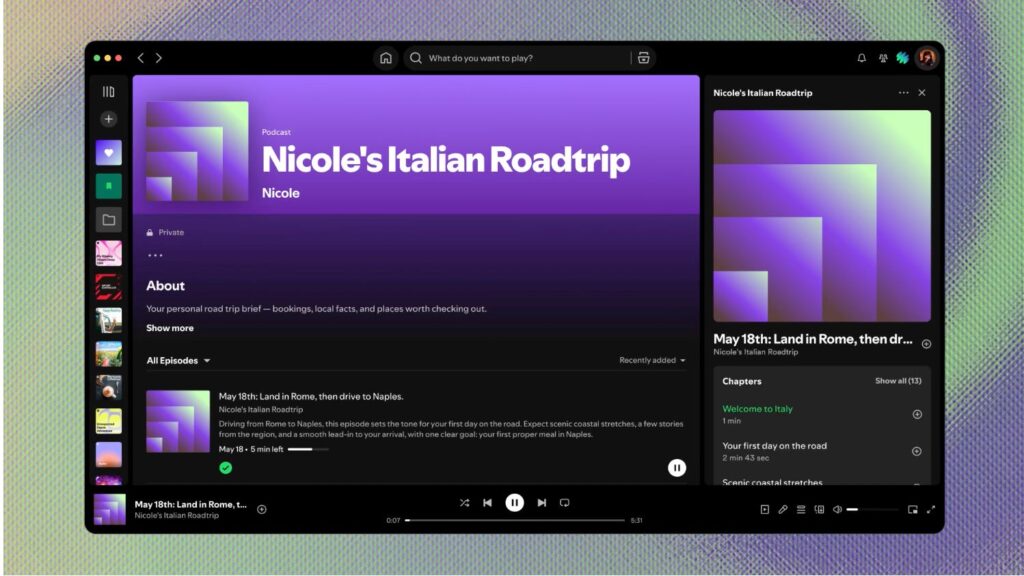
Studio by Spotify Labs. Picture: Spotify

Spotify has introduced Studio by Spotify Labs, a standalone desktop application that uses artificial intelligence to generate personalised audio content.
The app, released as a research preview, is designed to let users create daily audio briefs, adaptive playlists, and short podcasts tailored to specific interests.
Studio
Spotify Labs described Studio as “a standalone desktop app designed to create audio shaped around you”.
“We’re becoming a service you can talk to, shape, and direct around your life.” The launch forms part of what Spotify has called “The Era of Generation”, signalling a shift from recommendation algorithms toward generative audio tools.
Studio’s daily audio briefs combine news, cultural updates, and entertainment with music suggestions. Short podcasts can be generated instantly, offering quick explorations of chosen topics such as technology, sports, or wellness.
Playlists are designed to adapt dynamically, reflecting changes in mood, schedule, or listening habits.
App
The app is being released separately from the main Spotify platform, a move that allows the company to test new formats without altering its core service.
Spotify has confirmed that Studio will be available in more than 20 markets, restricted to users aged 18 and older. No timeline has been given for a wider rollout.
NOW READ: Huawei CEO Will Meng: Digital transformation must deliver opportunity for all
Industry analysts note that the launch comes amid growing competition among streaming services to integrate AI.
Rivals
While rivals have focused on refining recommendation engines, Spotify’s approach positions Studio as a tool for co‑creation, allowing listeners to shape their own audio experiences.
For creators, the app could provide opportunities to prototype ideas quickly, while for listeners it represents a more interactive relationship with sound.
However, as a research preview, features may change or be withdrawn depending on user feedback.
Spotify’s move reflects broader experimentation in the audio industry, where AI is increasingly being used not only to recommend content but to generate it.
ALSO READ: Huawei reclaims premium ground with the launch of its new Pura 90s Series